

The board game created in Alicante that promotes health and environmental protection reaches schools, associations and foundations
The first edition of Health Shapers has been made possible thanks to Meridiano Seguros, which has distributed more than a thousand sets free of charge to promote wellbeing and values-based education. This educational project has been endorsed by Stanford University and is aimed at children aged 9 to 12
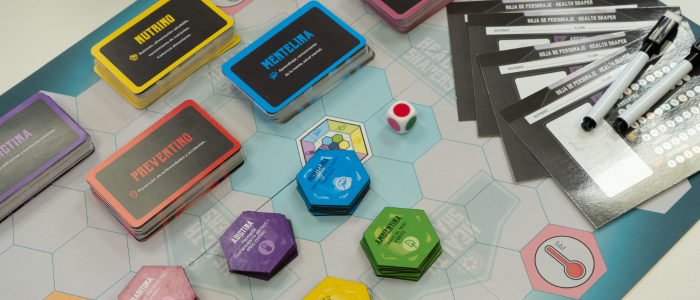
‘Health Shapers’, the board game created in Alicante to promote physical and mental health as well as environmental education, primarily in classrooms, is now a reality. In its first edition, it is already reaching a range of schools, associations and foundations.
Endorsed by Stanford University and CEU-UCH, it has been designed as a pedagogical, cooperative project for children aged 9 to 12. Both institutions saw in this initiative a clear opportunity to support and foster meaningful, classroom-based learning that encourages collaboration, teamwork and the exchange of ideas.
The first edition became a reality this year thanks to the involvement of Meridiano Seguros from the outset. The company has also distributed the game free of charge to the many schools that requested it.
In addition, committed to promoting physical and mental health in childhood and adolescence, as well as caring for the planet, Meridiano has given away copies of Health Shapers to a range of associations and foundations.
So far, more than one thousand sets have been delivered to numerous schools in the Valencian Community and Andalusia, as well as to organisations working directly with children and teenagers in vulnerable situations, using the game as a teaching tool to promote wellbeing and values-based education.
Over 200 ‘Health Shapers’ sets have, for example, been given away to AMAIM, the Murcia Association for the Support of Abused Children. They will use the game in schools and classrooms where they deliver training on preventing child abuse and encouraging positive treatment.
Meridiano Seguros has also sent sets to other foundations such as ANAR, dedicated to protecting children and adolescents at risk. They requested the game as a teaching resource for their two foster homes for vulnerable children and teenagers.
A similar case is the Soñar Despierto Foundation, which has distributed the game across the 30 foster homes it operates in the Valencian Community for educational and recreational activities.
Around 60 sets have also been delivered to La Niña Amarilla, an association focused on suicide prevention, with further sets going to the Association of Volunteer Foster Families (AVAF), which will distribute them at Christmas among the children they support.
“At Meridiano Seguros, in line with the strategic plan objectives of ASV Group, which we belong to, we backed this initiative from day one because it is fully aligned with Sustainable Development Goal 3 (Good Health and Well-being), a goal we are committed to promoting through all our contributions to society,” explains Sonia Carricondo, Head of Communication and ESG at ASV Group, to which Meridiano Seguros belongs.
For this reason, as well as helping to make the game a reality, the company is actively supporting its free distribution to schools, foundations and associations, especially those working with the most vulnerable children.
More about ‘Health Shapers’
Save the planet from health threats by forging your own path. That is the core idea behind ‘Health Shapers’, designed to help children learn – and above all raise awareness – by facing challenges, building skills and defeating the villains, the fearsome Amorphs: characters who seek to warp human life on Earth by threatening physical and mental health and who are increasingly difficult to contain.
The aim of the game is for young people to understand how today’s decisions will affect their future health. It addresses current issues such as the negative effects of excessive screen time, energy drinks and vaping… as well as topics related to cyber security and cyberbullying.
This educational tool is the result of an exhaustive research process that consulted over 150 working documents, including scientific society guidelines, manuals, public and private institutional websites, and experts in the prevention of physical, mental and environmental health risks.
Published in Corporate Social Responsibility